
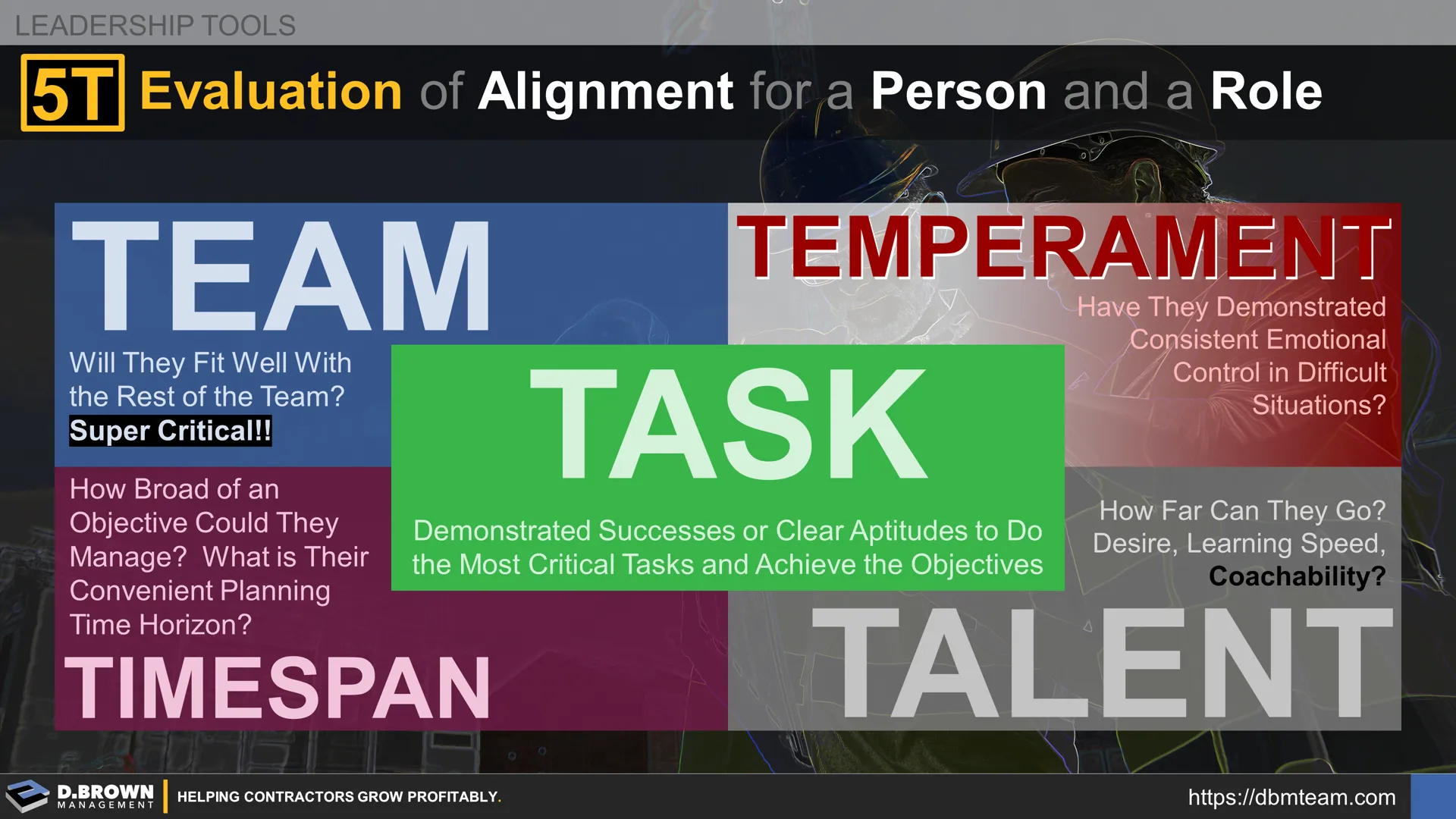
Whether it is assessing a new person for the team or whether an existing team member is right for a different role, start with these 5 basic categories:
PREREQUISITES: Do you have a clear future-state organizational structure that is aligned with your vision and business plan, including roles described as inputs and outputs?
- TASK: Can they do the job you need done? Have they demonstrated this in similar situations or do they have the raw talent and time span to get there?
- TEAM: Will they fit in reasonably well with the rest of the team? Do their core values align with those of the team?
- TEMPERAMENT: Harder to evaluate in an interview for a new hire, but very critical. Have they demonstrated consistent emotional control in difficult situations appropriate for the role you need them in? Don’t overlook how critical this is. Consider how much of your time and emotional energy it takes to work with someone who vacillates between hot and cold frequently.
- TALENT: Ultimately, it is about your evaluation of how far they can go. How high is their demonstrated desire to be successful? Discipline? Learning speed? Coachability?
- TIME SPAN: An important concept to understand and evaluate when it comes to placing people in leadership roles.
BOOKS: Who: The A Method for Hiring and Topgrading