
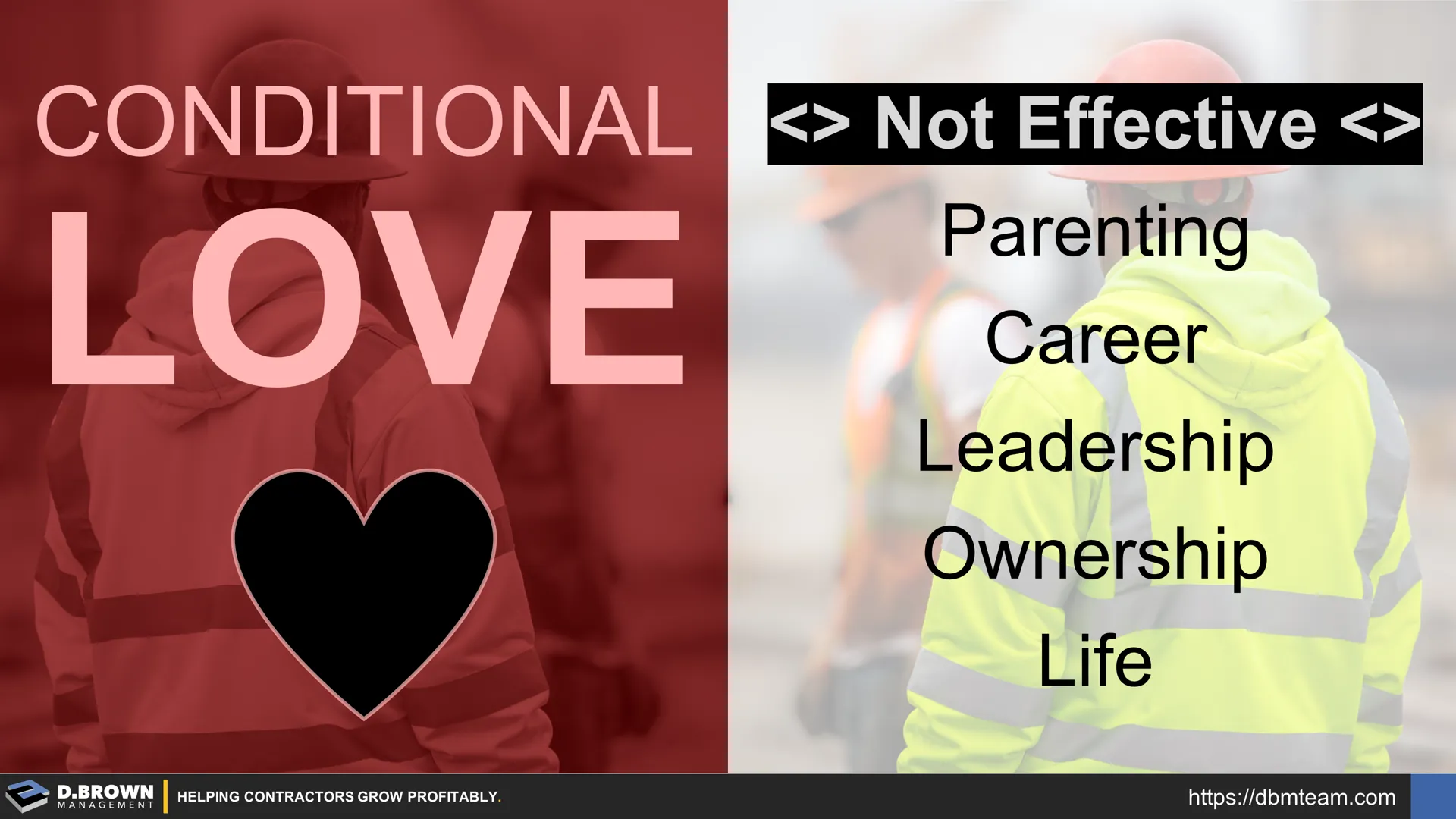
Being an effective parent starts with unconditional love. Babies require a sense of psychological safety to keep striving, despite the inevitable failures that come with it. Unconditional love for others starts with unconditional love for ourselves. Unconditional love is difficult to explain unless you've had it modeled for you.
So, what does this have to do with construction contracting, projects, and careers?
While there will be different definitions and degrees of love beyond what we would have for ourselves, our kids, and our families, the fewer conditions you have, the more outcomes improve—and the journey becomes a whole lot more enjoyable.
That need for psychological safety is the foundation for development in children, adults, and high-performing teams. As we age, progress in our careers, and take on more responsibilities—even up to company ownership—the gaps created by conditional love only worsen.
Note: Don't mistake unconditional love for a lack of boundaries. Dr. Brené Brown describes this very well in a 5-minute video. https://vimeo.com/274228723
After watching this video, take a moment and reflect on all aspects of your life and career. Consider the the conditions you may have in place and those you believe others may have toward you. Don't take any immediate action. Sleep on it. Revisit your list in another few days and over the next few weeks, noting what has changed and what hasn't.
If you're leading a large team or the company, you'd be amazed at how building a psychological safety net for your team can improve performance, reduce turnover, attract great talent, and make even the worst days at work pretty enjoyable.
