Organizational Structures and Leadership Development

As contractors look at their organizational structures with an eye toward both sustainable growth and succession, they must balance the efficiency a functional area structure provides with the leadership development of a business unit structure.

D. Brown Management Profile Picture
Share

In a functional area structure, you avoid duplication of roles and individual functional areas such as estimating, purchasing, and field management are centralized. If executed effectively, this creates great efficiencies with the enabling bureaucracy required for scalability.
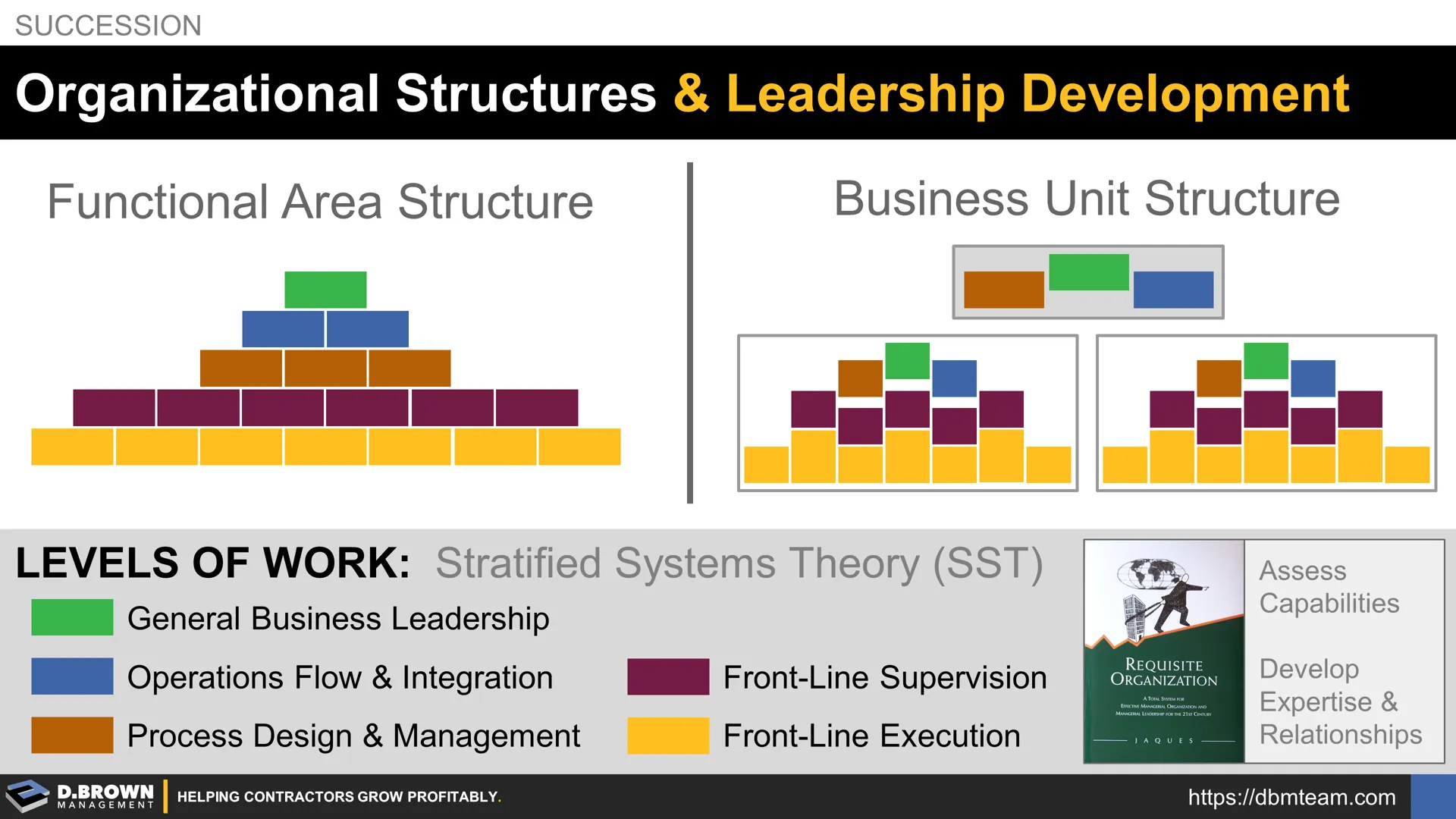
Succession: Organizational Structures and Leadership Development. A functional area organizational structure versus one aligned around business units down to a Project Manager. Levels of work including front-line execution, front-line supervision, process design and management, operations flow and integration, general business leadership. Stratified Systems Theory (SST).

For some contractors, it makes sense to break the business into smaller independent business units so broader general leadership skills can be developed and assessed. These individual business units are smaller and the job roles must be more fluid, which can be great for accelerating development and frustratingly messy at the same time.  

Just remember that compensation and accountability will not create competencies and both structures require deliberate development of the team.  

This is more challenging than we can cover in a short post. Please contact us if you want to further discuss the specifics of your organizational structure. 


Organizational Structures and Leadership Development
Continue building value in your business, yourself and your key team members with a good succession strategy....

Organizational Structures and Leadership Development
Continue building value in your business, yourself and your key team members with a good succession strategy....

Can't Learn to Swim Without Getting Wet
Most everything we learn to do in the field for construction comes down to hands-on practice. When we move people into supervision and management roles we often forget the need to truly practice hands-on to get great at doing something.
Creating Value
Know the difference between creating real value versus creating transactional value. Creating wealth and not just re-allocating it is the path to sustainable growth. Understand the differences and how to incorporate them into your strategy and planning.
Tracking Change Progress (The Funnel): Basic Status Categories
Managing changes effectively means that you need clear visibility across all projects. While the workflow will vary by project, the key progress milestones in your internal process will remain fixed.