
For example: Part of that goal might be to have at least a 30% market share on all higher-education construction within Georgia by 2025.
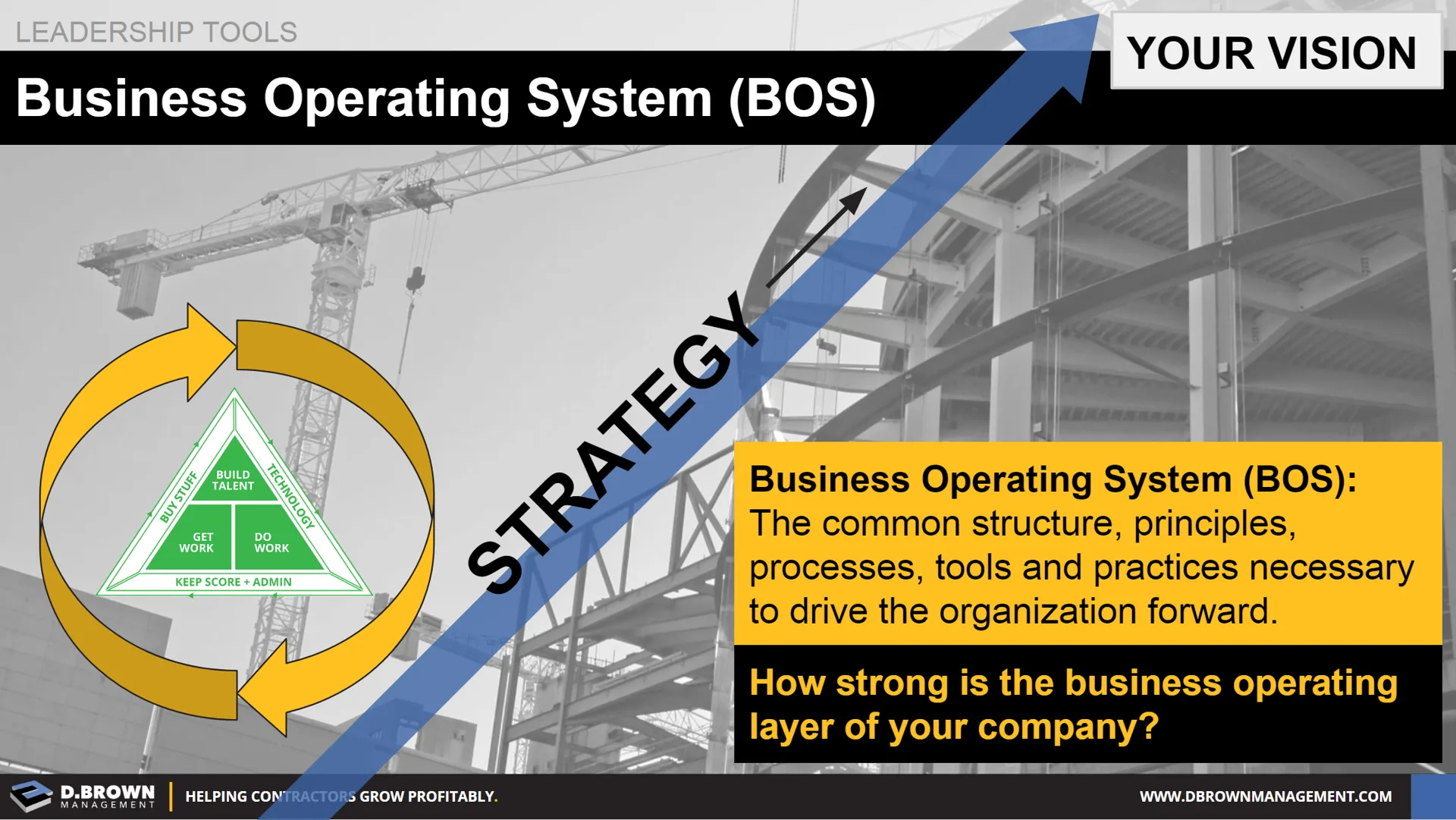
- Those goals will evolve more slowly over a longer period of time.
- The strategies to accomplish this goal must be more flexible and change as conditions change.
- The basics of winning and building projects along with the supporting systems are always under continuous improvement.
Sitting in between all of these are the various meetings, tools, feedback systems, and decision-making processes that keep things on track.
This is called the Business Operating System (BOS) and is very unique to all companies, evolving as the business scales. The Toyota Production System (TPS) is one such example.
It is the robustness of this layer of the business that determines how effectively the contractor will navigate each stage of growth.
What are the key elements of your BOS, including people, meetings, feedback systems, and decision processes?
Are these driving the results you want?
Schedule some time to talk about your particular company.