
If we looked at talent and technology the same way we look at heavy equipment on a jobsite we would achieve a much better return.
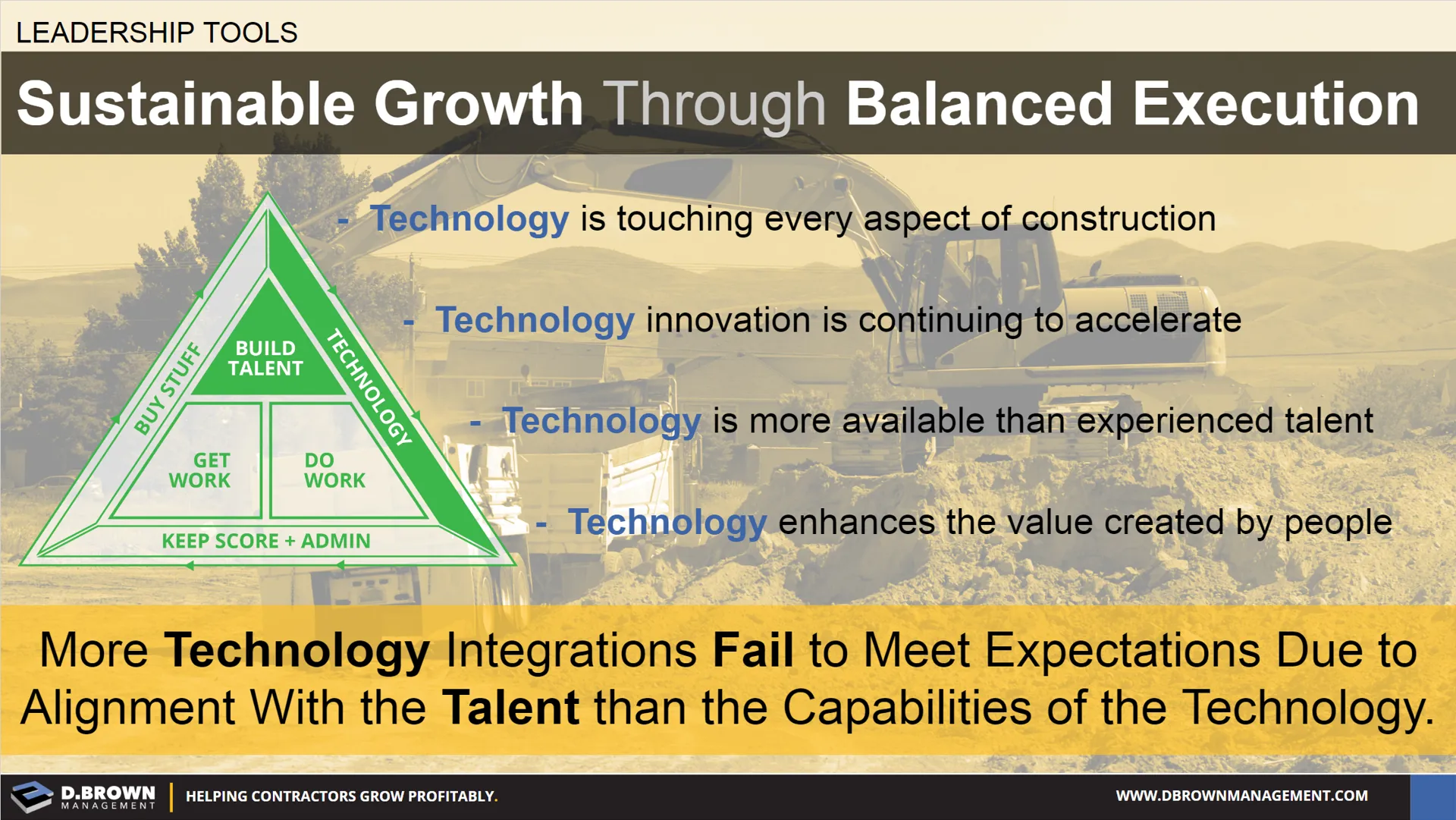
Construction equipment and technology are both large investments. They are both critical for running a contracting business effectively. They are both critical for building a project.
The operators of the equipment are all trained and certified to a certain base level of competency to use particular pieces of equipment. Some of these certifications are required by outside agencies.
- How do you train then “certify” that each member of your team is capable of using your technology systems?
Mechanics are dedicated to take meticulous care of the equipment including regular lubrication, fueling and check-ups. On a scheduled basis the equipment is taken out of production for an overhaul.
- What support systems does your technology have?
- How frequently are the systems reviewed?
- How much time and money is spent on major overhauls or integrations?
Even with the best equipment and operators they still have to be organized in the right sequence then actively managed to ensure maximum productivity.
- Are your technology systems aligned in that way?
- Can you visibly see the productivity of your team when it comes to your technology systems?