Creating an Operating Rhythm

What are the critical meetings, communications and feedback systems that keep your contracting business running like clockwork?

D. Brown Management Profile Picture
Share

Daily  >> Weekly  >> Monthly >>  Quarterly >> Annually
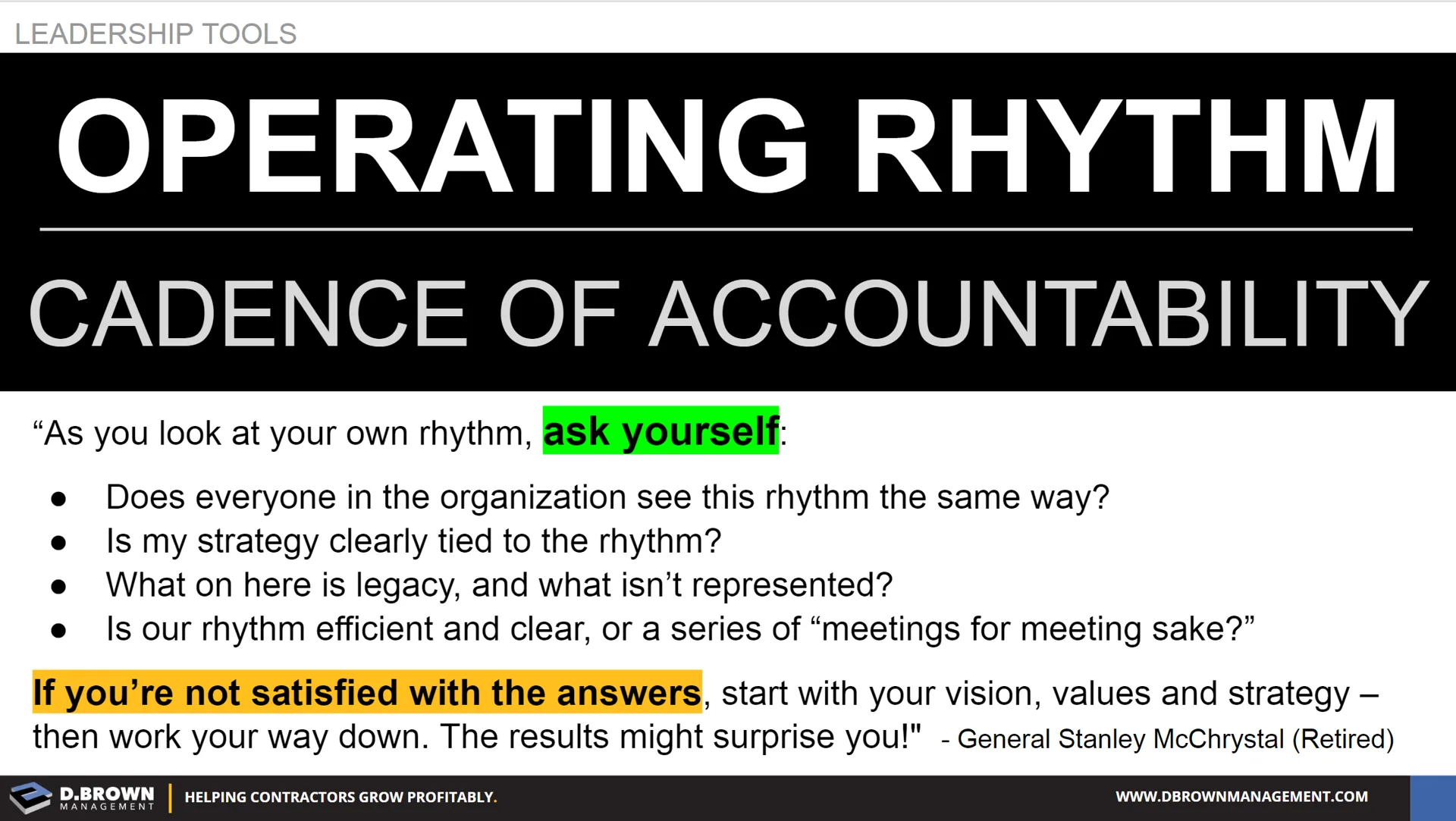
Leadership Tools: Operating Rhythm and Cadence of Accountability.

How do those Operating Rhythms at various levels; within different functional areas; in different geographic locations; and at different job sites interlock with each other effectively?  

Retired General Stanley McChrystal and his team talk about these Operating Rhythms in their books Team of Teams and One Mission

The team at FranklinCovey talks about Operating Rhythm as a Cadence of Accountability in The 4 Disciplines of Execution.

For a contractor to grow sustainably they need to move from “Doing Things” and ad-hoc communications into effectively integrated Operating Rhythms.  

When these changes don’t occur it causes stress on the organization and impacts profitability.  


The Teacher and the Student in All of Us
The rate a contractor can grow is the average speed the team learns and teaches at. We are all teachers and we are all students. There are many things that we can do to improve ourselves on both sides of that equation.
Levels of Improvement: Start with the Foundation
Every process in your business including field productivity will go through three levels of improvement: From predictable to productive to scalable. Trying to skip levels is the surest way to slow down improvements across the company.
Scoreboards & Scorecards: Talent Development + Business Results
Once someone understands the basics of the task to be done, nothing will improve performance faster than actionable and timely feedback. People align around common scoreboards (think sports) while more detailed scorecards guide decisions and development.