Increased Value by Lowering Variability

A construction business is capable of providing a very high return to the owners who have their capital at risk as well as the team members that work there.

D. Brown Management Profile Picture
Share

The leadership teams of contractors must constantly assess where the business is at in the growth cycle and whether their current strategy, structure, talent and management processes are ready for the next stage of growth.  
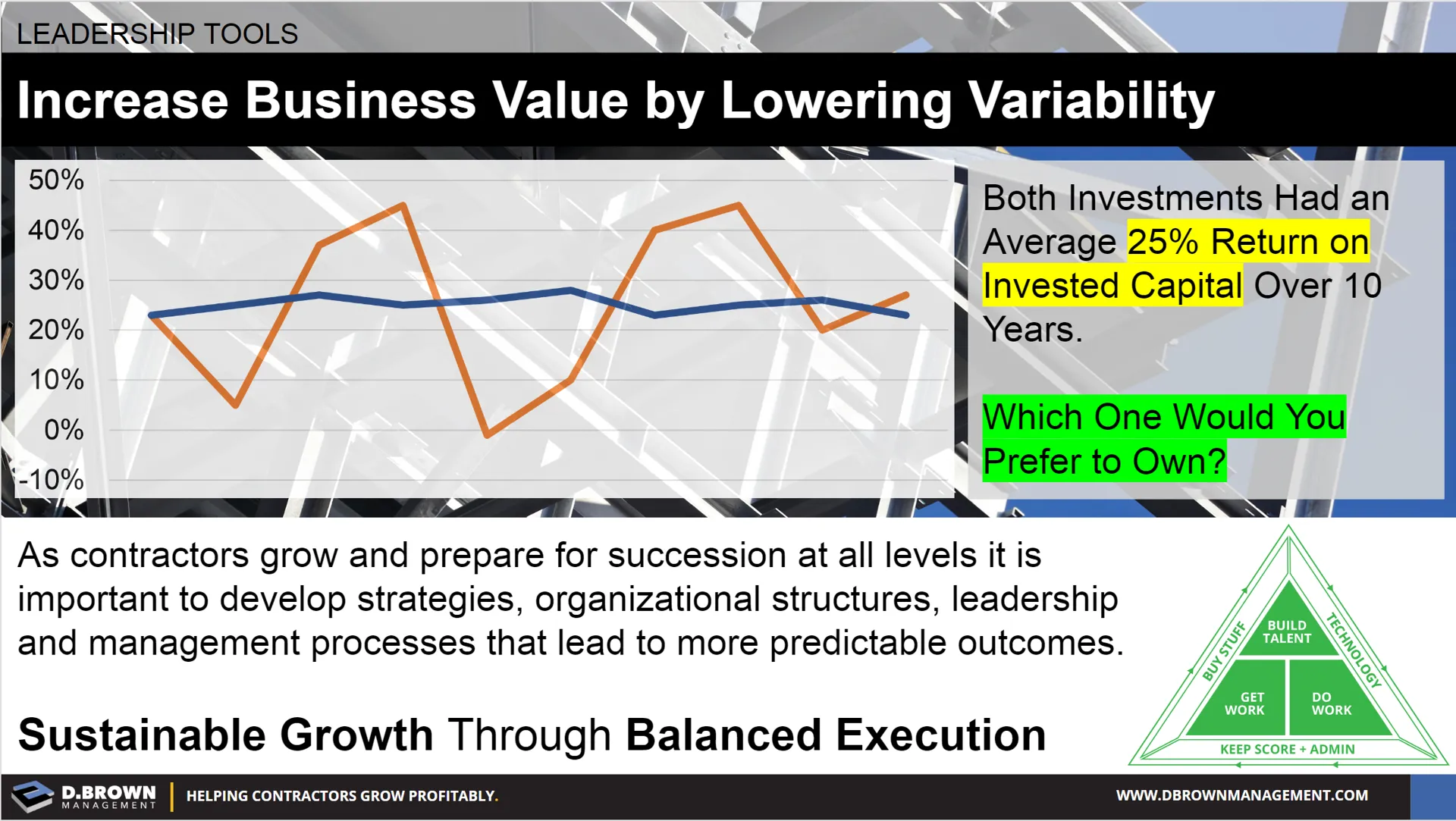
Leadership Tools: Increase Business Value by Lowering Variability. Sustainable Growth through Balanced Execution.

As a business is growing; especially with a strong leader in place it is easy to become what we call a hollow contractor.  A hollow contractor typically has performed extremely well in some years.  

What they are typically missing is a depth of talent at all levels supported by scalable processes and training that enables sustainable growth.   

  1. Get your market strategy right ensuring consistency through various economic cycles.
  2. Set up your organizational structure to support this market strategy.  Focus on the roles and capabilities that are necessary; not the people.  
  3. Know where your talent gaps are in both bodies and capabilities.  
  4. Aggressively fill those gaps through training, recruiting and when necessary by terminating.    

Only after this foundation is well under way should you focus on the next steps.  


Impacted Productivity - Disrupted Workflow (No Schedule "Flow")
One of the biggest impacts to productivity in construction is when tasks cannot be completed as planned. When this happens frequently, it starts to impact every aspect of the contractor’s scoreboard in a negative way starting with customer satisfaction.
Incentive Compensation for Contractors - Audience Question: Keep Why Top Of Mind?
Incentive programs can be as seemingly small and informal as a handshake from a manager for a job well done up to very large cash compensation.
Creating Value
Know the difference between creating real value versus creating transactional value. Creating wealth and not just re-allocating it is the path to sustainable growth. Understand the differences and how to incorporate them into your strategy and planning.