
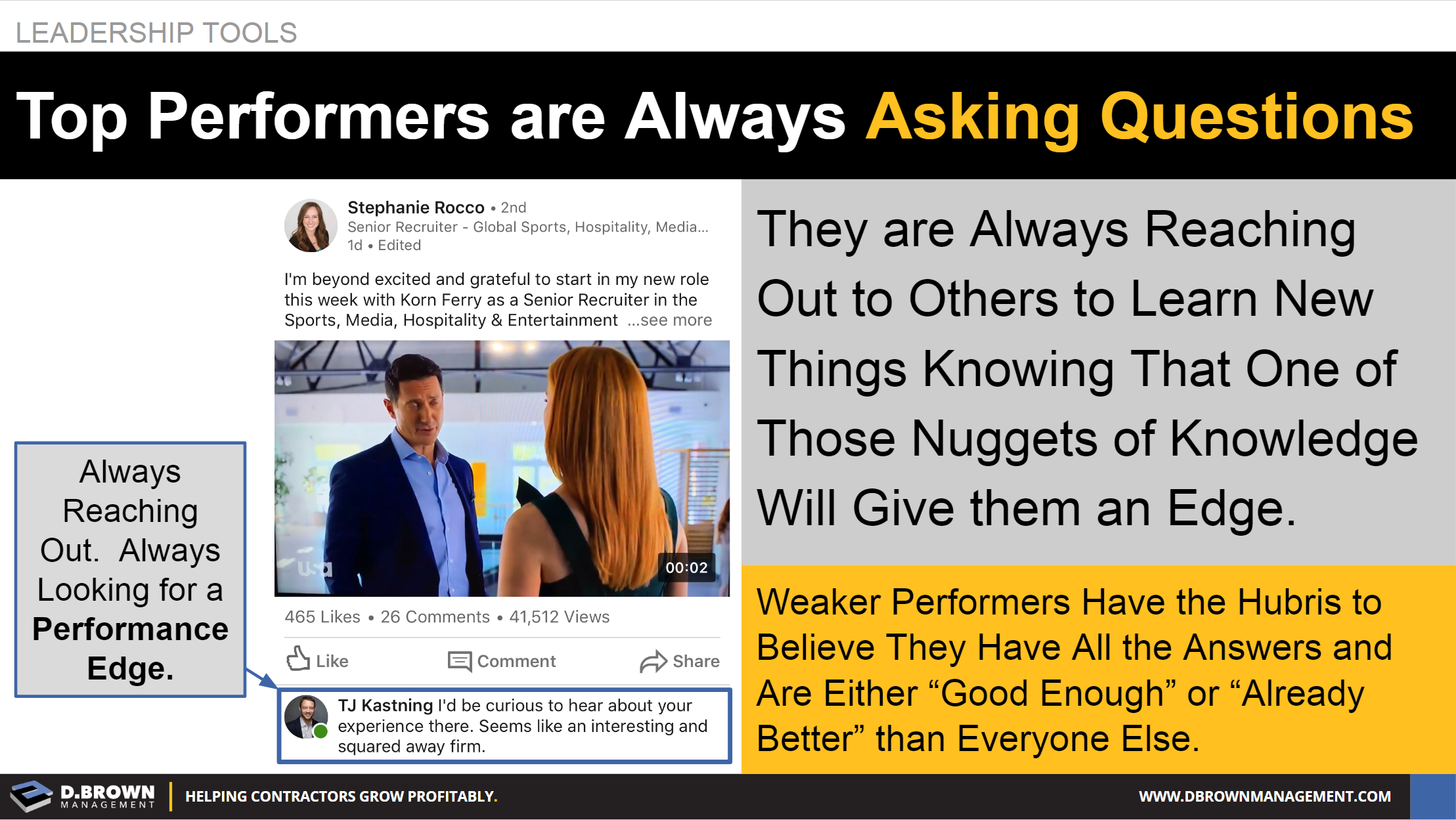
Top performers are constantly asking others questions.
Top performers have daily habits where they work to acquire new knowledge.
Top performers relentlessly practice and experiment with things they learn, combining the new and the old into something unique.
Top performers know that over 95% of this is total waste.
Top performers also know that the return on the 5% of new relationships they develop and knowledge they gain have a 100X or better return.
Top performers know that sometimes those returns aren’t obvious for years or even decades.
Top performers know that if they spend too much time trying to determine if something is a waste or not, they will never get started. They know it is better to aggressively learn and experiment and then scale-up when appropriate.
Weaker performers have the hubris to believe they know enough already and can’t learn anything from anyone else.
Weaker performers are discouraged when they try something new and it doesn’t work.
TJ Kastning is an example of a top performer always seeking to sharpen his skills.
Who is someone new you have reached out to this week to sharpen your skills? How many this year?
