Business Operating Layer

Execution is critical for contractors because we work in a highly competitive business with relatively low margins compared to the risks taken.

D. Brown Management Profile Picture
Share

Execution is the discipline of getting things done. A simple way to look at your organizational structure is in three major layers:
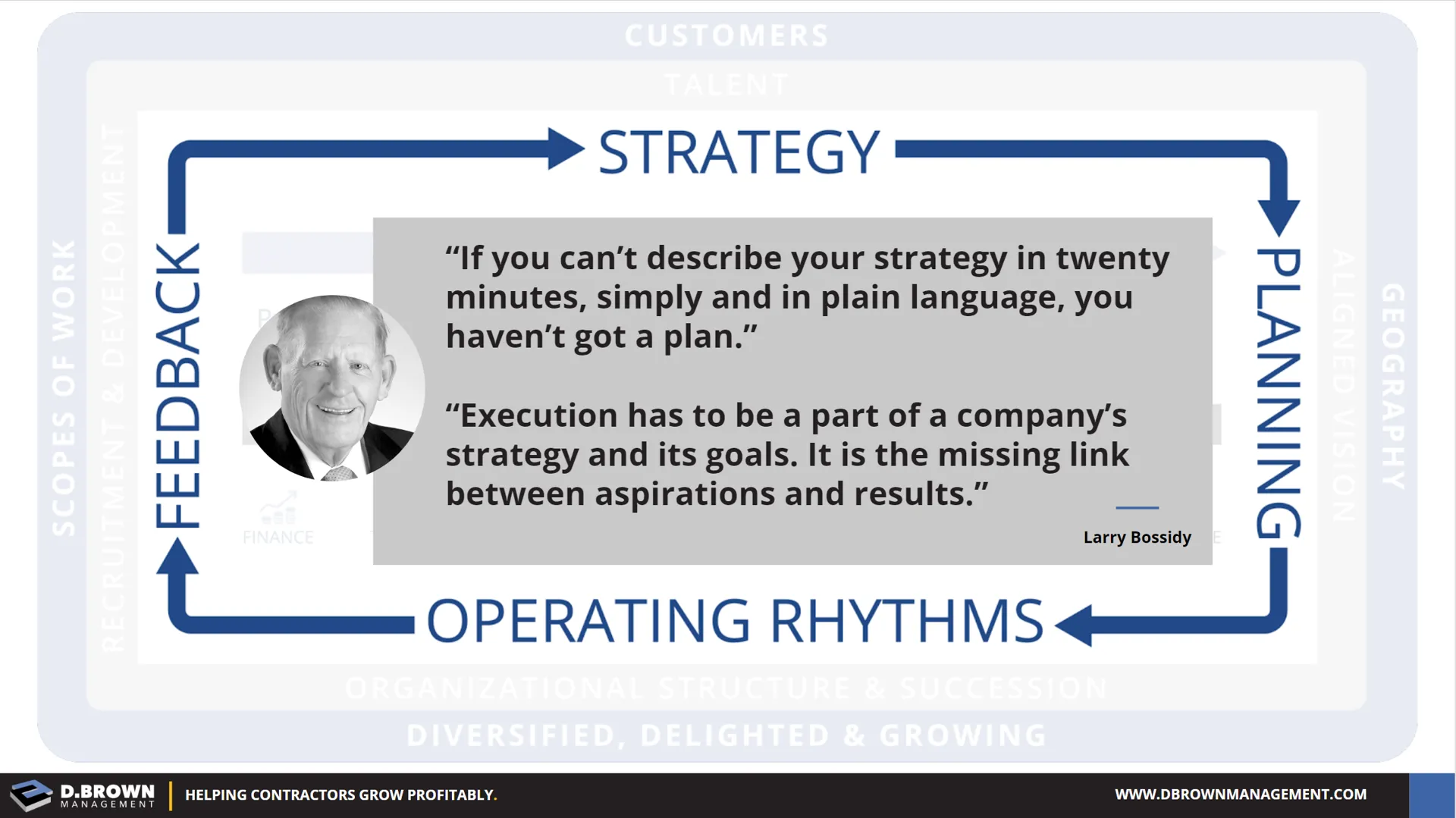
Contractor Business Model Business Operating Layer.
  1. Ownership & Senior Executive Leadership:  Defining what you want the business to look like over 10+ years and how the business will be setup for the next generation of leadership.  
  2. Business Operating Layer: This is the layer that ensures execution of the long-term strategy and delivers the financial returns required by the owners.
  3. Project Execution Layer:  This is where the rubber meets the road and value is added to your customers.  This layer makes up the majority of the talent, time and other resources in any contracting business.  This includes all project related people and support. This is the foundation and any weaknesses here will show up everywhere.  

How many of the problems you are having at the Project Execution Layer are due to weaknesses in the Business Operating Layer?   

Learn More


Two Planning Dimensions
Some of the impacts you see on a project are not as clear as a design change, conflict, or obviously changed condition. Some impacts, such as poor project sequencing or congested work areas are hard to notice if you don’t have good tracking systems.
Retirement Onboarding - Success & Risk
Nearly all of the 6 common exit strategies for contractors require the business to continue being successful for the outgoing owner to get paid. There are a couple of things that can be done to help ensure everything stays on track.
Off-Boarding: Basic Categorization and Management
Contractors will improve their whole Talent Value Stream (TVS) including planning, recruitment, and retention by being intentional about how they off-board team members.