Death From Indigestion - Sustainable Growth

Many contractors are faced with a nearly overwhelming amount of profitable work in the current economy.

D. Brown Management Profile Picture
Share

Many are posting record bottom-line profits helping their balance sheets recover from the recession.  
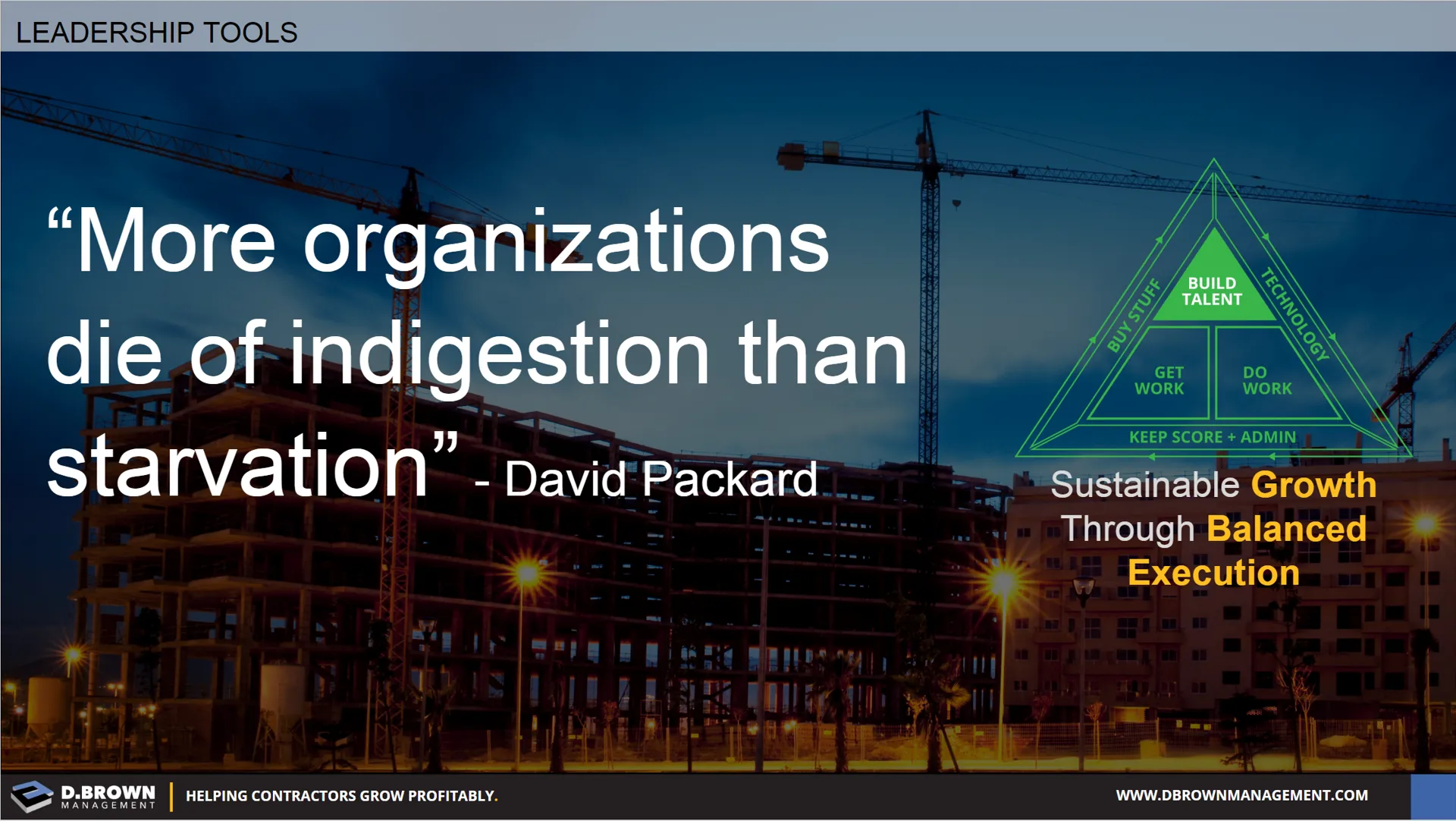
Quote: More organizations die of indigestion than starvation. David Packard.

With that it is important to remember the critical observation from David Packard:     

 “More organizations die of indigestion than starvation” 

Toyota is a very strong company with an amazingly strong culture and even they weren’t immune as they pushed their worldwide expansion a little too quickly.  Toyota was far from death but they did have some operational and quality problems. 

The ultimate root cause was discussed in Developing Lean Leaders at All Levels:  Their rate of revenue growth outstripped the rate they could develop their leadership (talent).  


Will the markets you are in today support you through the next cycle in the economy?  

Do you have a predictable way to develop new business - even in a tight economy?  

Are you investing enough today in building your competitive advantage for tomorrow?  

How does your talent acquisition, development and retention compare to your growth rate and your competitors?  

Learn more about sustainable growth for contractors


Production Tracking - Changing the Language
Your productivity will start to really improve as it becomes a culture and not just a tracking system. You will first notice this as a change in language in the field and across the whole project team.
Management and Leadership (Similarities and Key Differences)
A growing contractor requires both great leadership (right direction) and great management (right actions). The creativity required to attract, motivate, develop, and retain people are where management and leadership intersect.
Lean Principle - 8 Categories of Waste
The first step in improving labor productivity in construction is improving everyone’s ability to see the waste. Waste can then be broken down into 8 major categories. Like colors these are often interrelated.