Different Heights Require Different Skills and Gear

Think about building a business the same as you would hiking up a mountain with each different phase requiring different skills and different gear.

D. Brown Management Profile Picture
Share

If you go on a day hike with the family and you are a little unprepared you might get a little thirsty or hungry.  Not a very big deal and easy to get through.  
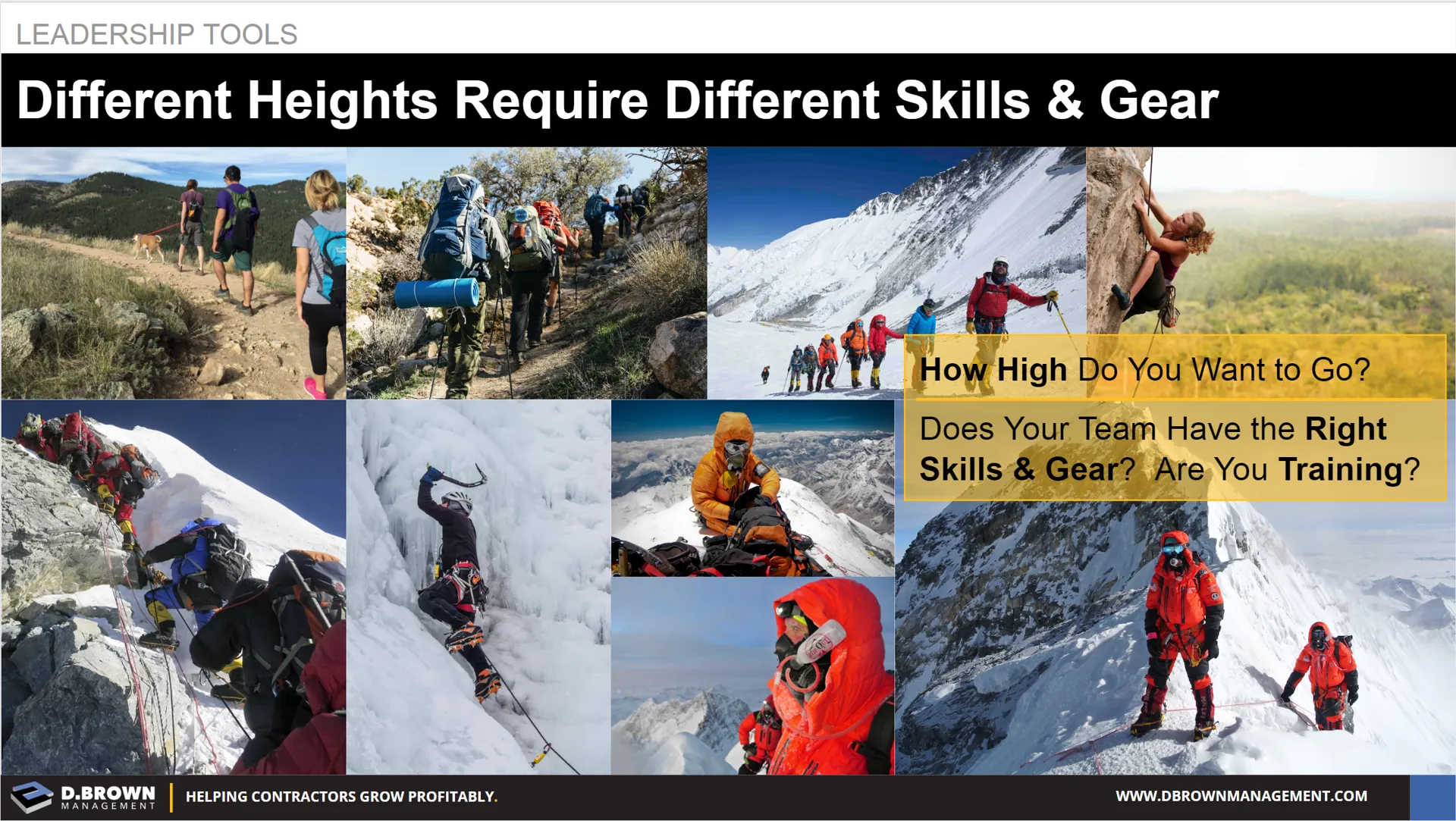
Leadership Tools: Different Heights Require Different Skills and Gear.

At the other end of the extreme if you are climbing Everest you will need to train for years to get into the right condition.  You will have to learn to use a variety of gear. You will have to build an amazing support team. And even with all that preparation there is a huge element of luck involved in whether you will make the summit or not.

Somewhere between a day hike and climbing Everest is where most contacting businesses are at.  A third party can be exceptionally valuable helping you identify what the road ahead looks like and ensuring that your team is prepared with the right capabilities to tackle that next phase. If you start building these capabilities too late it will create excessive stress on the organizational and may lead to failure.  

As contracting businesses grow the leadership focus, strategy, organizational structure and processes must change.


Learn More:  Ichak Adizas / Corporate Lifecycles

Schedule an introductory meeting with us to learn about our approach to helping contractors prepare their teams for sustainable growth


Headcount, Management Structure, and Systems
Your management structure and systems must be able to support your forecasted 2-month peak headcount, including the ramp-up to that peak.
From Financial Management to Business Management
As contractors go through different stages of growth it often makes sense to expand the financial management role into more comprehensive business management role. At exactly what stage a contractor starts to expand this role depends on.
Management System Improvements (4 Interlinked Phases)
Many improvements fall short of expectations because steps are skipped in the earlier phases. Following these four phases will result in faster overall adoption of the changes, better outcomes, and most importantly, development of the team.