
Adam Lashinsky the author of Inside Apple (2012) describes the Directly Responsible Individual (DRI) in this 2-minute video clip.
Hyman G. Rickover who is considered the "Father of the Nuclear Navy" described responsibility as:
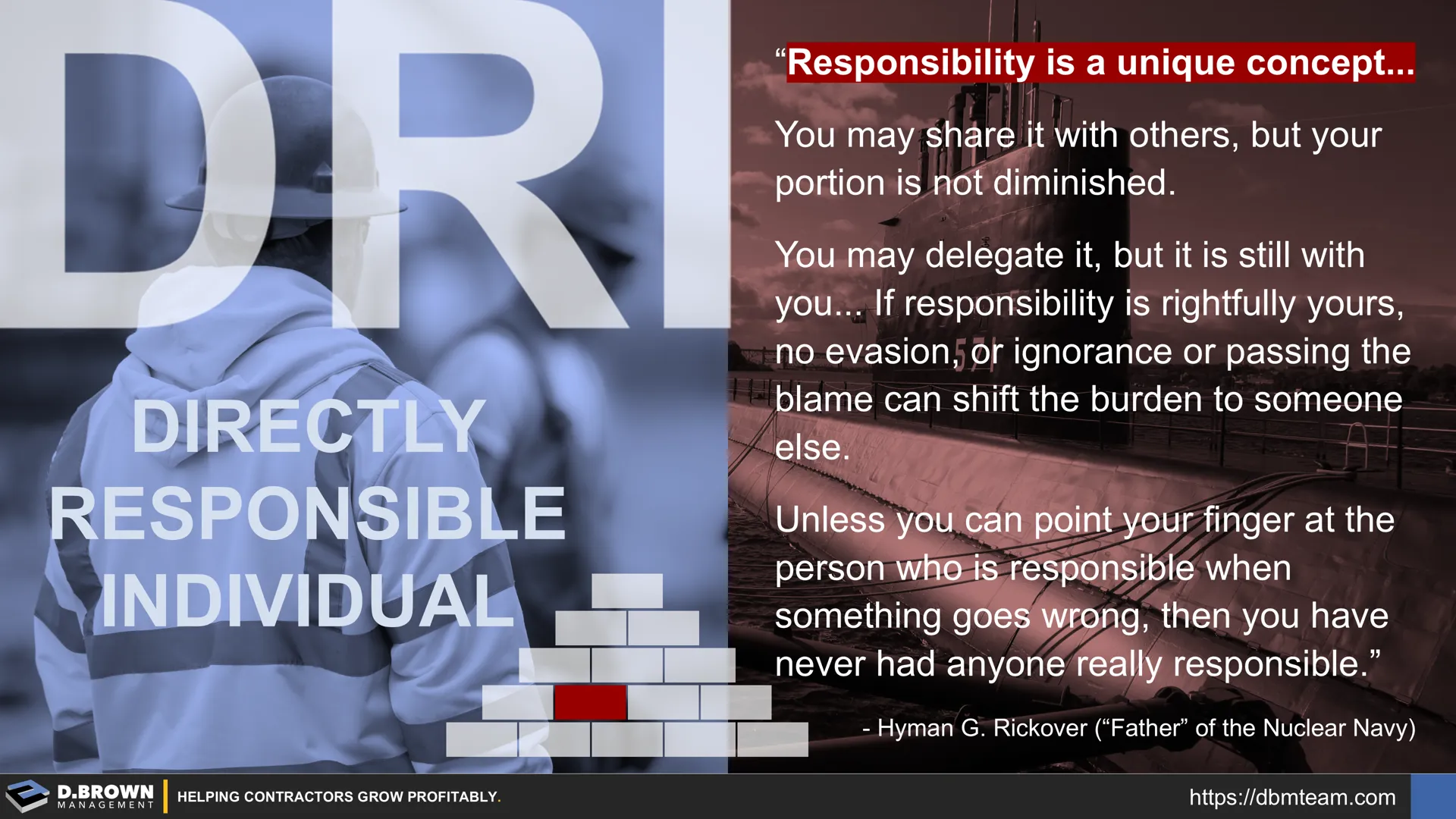
“Responsibility is a unique concept...
You may share it with others, but your portion is not diminished.
You may delegate it, but it is still with you...
If responsibility is rightfully yours, no evasion or ignorance or passing the blame can shift the burden to someone else.
Unless you can point your finger at the person who is responsible when something goes wrong, then you have never had anyone really responsible.”
With that said, there is a lot that goes into effectively defining someone as being responsible:
- What level of standards are in place for delivering the expected results?
- Is this a first-of-kind for the company, manager, or responsible individual?
- Do they have the capabilities required to deliver the expected results?
- Are these proven capabilities based on past experience, or hoped-for capabilities based on aptitude?
- Do they have the capacity required to deliver the expected results in the expected time?
- Do they have the right level of authority (decision rights) required to deliver the expected results?
- Does their manager have the right combination of capabilities, capacity, and authority to add value to the responsible individual?
- Is their manager held accountable for the work product of the responsible individual and their team?
Keep in mind that accountability and responsibility without prerequisites often ends in failure.
Remember that it is workflows (value stream, process, system) that create the results that you are looking for. There are individuals directly responsible for individual tools, tasks, and decisions within that workflow. There are individuals directly responsibilities for related groups and the workflow as a whole.