Making Decisions Effectively

Contractors must invest in accelerating the development of leadership talent and a big part of leadership is about making the right decisions in difficult situations.

D. Brown Management Profile Picture
Share

The impact of the critical talent shortage in construction will continue to get worse.
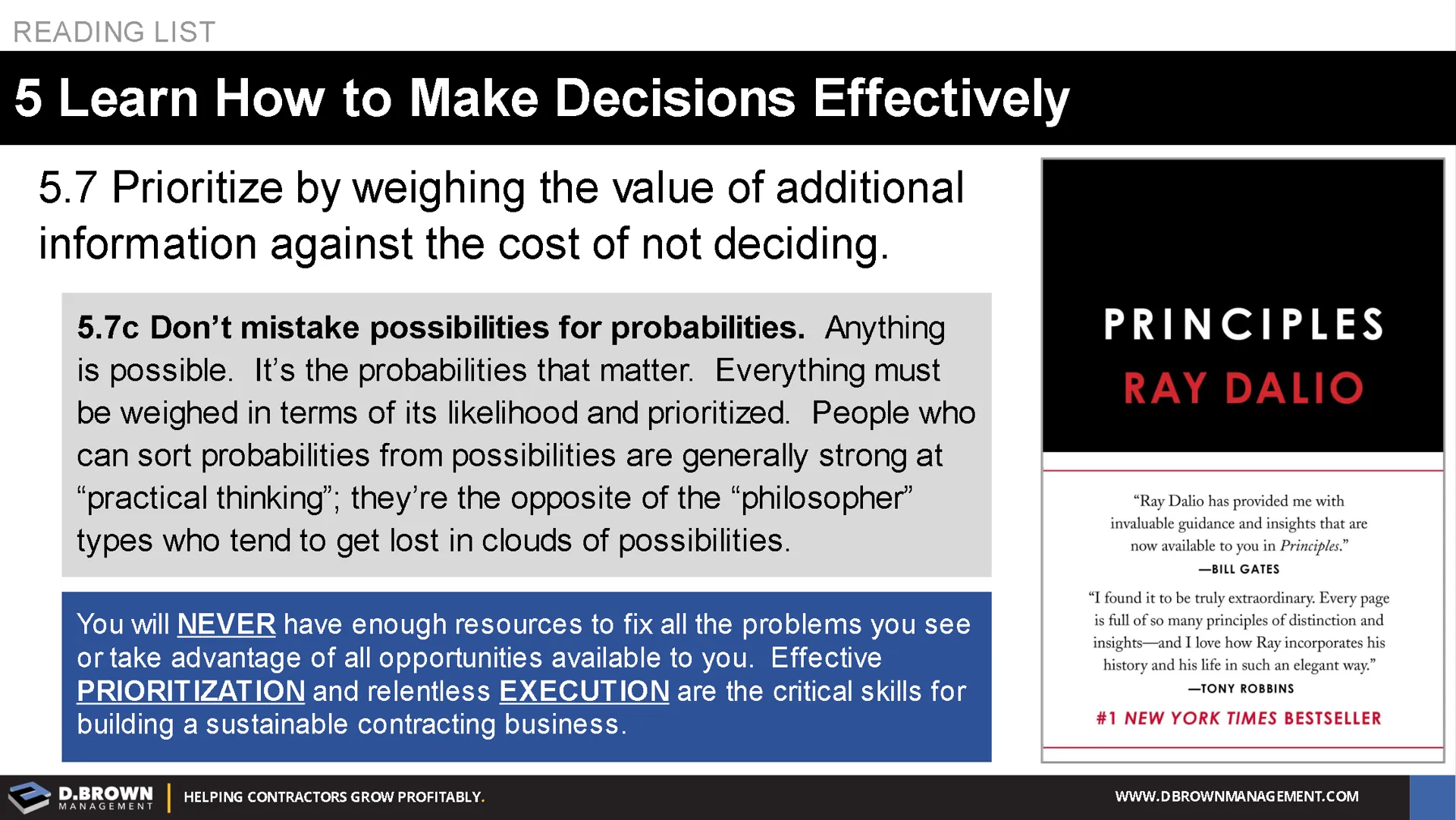
Reading List: Learn How to Make Decisions Effectively. Book: Principles by Ray Dalio.

Principles by Ray Dalio is not only a great book but more importantly is the example of how it was created, how it is used, how it is refined (PDCA - Plan > Do > Check > Adjust) weekly and how it is formatted.

Every leader of a construction company should consider not only which of these principles apply to their business but more importantly how to start codifying then training others on their own decision making processes.  

What would it be worth for your company if you could accelerate the development of your leadership talent?

If you are nearing retirement age what would it be worth to the industry if you could unlock the decades of experience in your head?  

We provide a full range of management advisory, coaching and training services to contractors.  More than half of our time is directly spend on talent including preparing for succession at all levels. 

Learn More


A Typical Project - Understanding Cash Flow at the Company Level
As contractors face many opportunities in the market it is important to keep cash flow management top-of-mind. Growth eats cash and just a few hiccups in execution can put just about any contractor in a very bad position.
Time-on-Tools and Minimum Required Installation
Labor productivity IS NOT the biggest problem with field productivity. Under similar conditions the variation in how fast two crafts people actually “turn wrenches” is about 2X but there are far bigger problems to tackle. Focus on these three areas.
Lean Principle - Observation (Gemba Walks and Learning to See)
One of the most important tools for improving productivity is going to the jobsite or work area and observing for an extended period of time with the intent to understand but not to immediately interact. Observation progresses through about 7 stages.