Uncomfortably Exciting - Being a S.M.A.R.T. Leader

Being a manager or a leader is not a choice or a job description. Success comes from being both and balancing them effectively.

D. Brown Management Profile Picture
Share

Managers must set goals that are S.M.A.R.T. (Specific, Measurable, Achievable, Relevant and Time Bound.  Leaders must be stretching their teams toward objectives that are beyond what anyone believes they can achieve

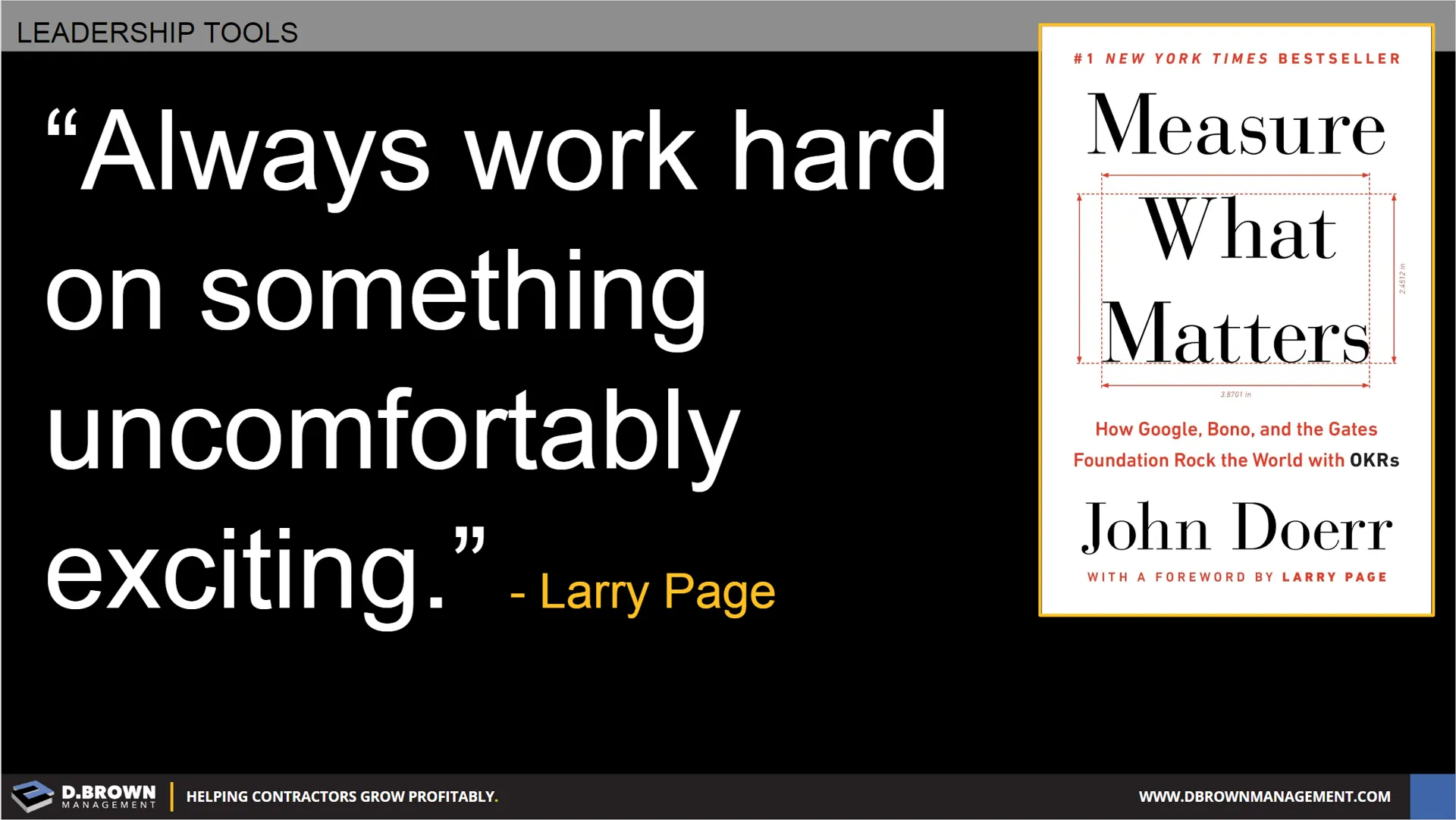
Quote: Always work hard on something uncomfortably exciting. Larry Page.

John Doerr and Larry Page describe these as two different types of OKRs (Objectives & Key Results):

Committed

These are the management level OKRs that must be accomplished no matter what:  

  1. Ask “What must be done?”
  2. Develop a plan
  3. Work that plan every day
  4. Follow up relentlessly. 

“It is not enough that we do our best; sometimes we must do what is required.”

Winston Churchill

Aspirational

These are the leadership level OKRs that, as Larry Page describes, must make the whole team “uncomfortably excited.” 

Aim high and ask the harder question:  “What would have to be true for this strategy to work?” rather than the simpler question of “What is currently true?” 

This is the difference between how an architect approaches things from the top down versus a builder who typically approaches from the foundation up.  


Leading Growth through Building People
Southwest disrupted the airline industry by a relentless focus on building their people around a culture of fun, hard work, and hands-on leadership. Contractors with that same level of focus on their people and culture will dominate the industry tomorrow.
Resource - Gottman and the Science of Relationships
There is no relationship more intimate than that of life partners. Executive-level relationships, including business partnerships, share many similarities. The Gottmans have dedicated their lives to studying relationships, trust, and conflict resolution.
Governance Structures Enabling Ownership Transitions
Governance structures including the board of directors, policies, information flow, operating rhythm, and decision rights must continually evolve through each stage of growth and ownership transition. The first board is typically driven by a transition.